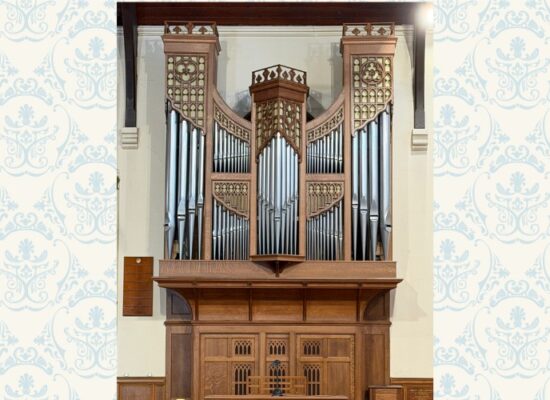
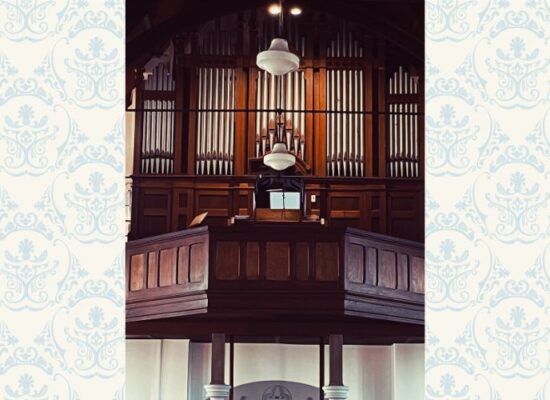
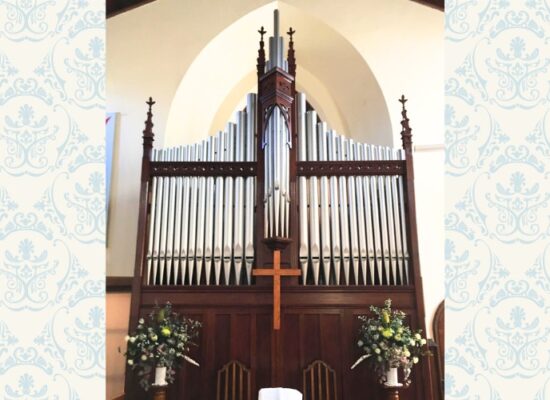
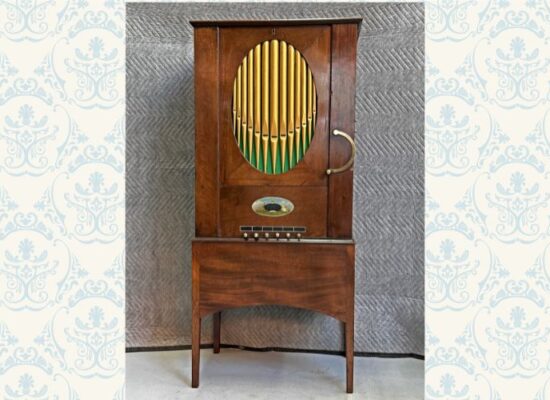
Dating back to the 1800s, the provenance of this organ is a little mysterious. It was installed in St Mary of the Immaculate Conception, Williamstown in 1905, possibly by William Anderson. The parts used possibly date back to the mid 1800s. Moved from the West gallery to the South side chapel by George Fincham & Sons in 1980, the tracker action was overhauled and the Salicional 8’ replaced by Flute 4’.
This move and overhaul of the organ appears to be the last time it received any great attention: the organ was quite dusty and the dust had built up to the point where it was affecting the speech of the pipes. The pipes were also suffering from other problems. The wooden pipes were in need of particular care as the stoppers in them had shrunk and become loose, making the pipes difficult to tune. The pillars that supported the rackboard for the Principal 4′ had also become loose, leaving the pipes to list and putting them at risk of damage.
The winding of the organ was also in need of attention as the leather used on the winding (sheep leather, perhaps up to 170 years old, and treated with a layer of oxide paint) had begun to perish leaving gaps that diminished the air supply to the pipes. The blower, though in good condition, was poorly situated. Being inside and resting upon the organ, the blower was noisy (inadequate sound-proofing) and by vibrating against the organ turned the organ itself into an amplifier!
The organ received a thorough clean. All the pipes were removed from the organ to be cleaned, as were the rackboards. Any and all accessible surfaces were cleaned, including surfaces inside the windchest. Any areas that were more difficult to access were cleaned with compressed air, as were delicate parts of the organ such as the action rollers.
The stoppers on the Stopped Diapason 8′ were repacked and regreased, along with stoppers from the Pedal Bourdon 16′ which needed attention.
New and additional pillars were manufactured and installed for the Principal 4’s rackboard. The additional support for the rackboard will make the chance of listing occurring again much less likely.
Repairing the winding. Along with the removal of the pipework and rackboards for cleaning, the wooden conveyances and their leather were also removed. The conveyancing was checked for splits, and the leather was replaced with a similar sheepskin leather, and rather than use an oxide paint while keeping with techniques of the days in which the organ was built, the leather was treated and sealed with egg albumen.
Rather than attempting to simply improve the sound-dampening that had been built about the blower, the blower itself was relocated to a discrete position between the wall and the organ. New winding and flanges were created to connect the organ with the newly located blower.